


A wave of worry out of nowhere. A racing heart over something small. If anxiety has crept into your life in midlife, even if you have never been an anxious person, your hormones are very likely part of the story. Here is why it happens, and what genuinely helps.
For a lot of women, the emotional changes of menopause come as a bigger shock than the hot flushes. You might feel on edge for no clear reason, lie awake with your mind whirring, or feel a flutter of dread doing things that never used to bother you. It can be frightening, especially if you have never struggled with anxiety before. Please know this is incredibly common, it is not a weakness, and there is a real, hormonal reason behind it.
Why does menopause cause anxiety?
The key culprit is your shifting hormones, and interestingly it is often the changing, rather than simply low, levels of oestrogen that cause the trouble. Oestrogen helps regulate serotonin, the feel good chemical that steadies your mood. As oestrogen rises and falls unpredictably through perimenopause, serotonin goes along for the ride, leaving your mood and sense of calm all over the place.
There is more going on too. Oestrogen influences cortisol, your main stress hormone, so as the balance changes, your body can end up in a more easily triggered, on alert state. Add in the broken sleep, night sweats and other symptoms, and it is no wonder anxiety can take hold. As many as half of women report anxiety during perimenopause.
Why has it appeared out of nowhere?
This is one of the most unsettling parts. Many women who were never anxious suddenly find themselves gripped by worry, and because there may be no hot flushes yet, they do not connect it to menopause at all. Hormone levels are at their most erratic in early and mid perimenopause, which is exactly when this can strike. On top of that, midlife often brings its own pressures, teenagers, ageing parents, demanding jobs, so hormonal anxiety lands on already full plates. If this is you, you are not losing your grip. Your body is navigating a genuine chemical shift.
Does HRT help with menopause anxiety?
For many women, yes. By steadying the oestrogen levels that have been swinging about, hormone replacement therapy helps a lot of women feel calmer and more themselves. It is worth knowing that for some, mood can dip a little at first, particularly with cyclical HRT, before it settles. If anxiety does not improve, or worsens, your GP can look at adjusting the type or dose. HRT is not the only answer, and it is not right for everyone, so a proper conversation with your GP is the best starting point.
Everyday things that genuinely help
Alongside anything your GP suggests, small daily habits can take the edge off and give you back a sense of control.
Breathe and slow down
Slow, deep breathing calms the nervous system and lowers stress hormones. Mindfulness, meditation and gentle yoga all help you notice anxious thoughts without being swept away by them, and research suggests mindfulness can be about as effective as talking therapy for easing anxiety.
Protect your sleep
Poor sleep and anxiety feed each other, so this is worth real effort. Keep regular sleep and wake times, keep the bedroom cool, dark and quiet, and leave the phone and television out of bed. Better nights make the days feel far more manageable.
Move most days
Exercise is one of the most reliable ways to lower anxiety, and it does not need to be intense. Even a brisk daily walk counts, and getting outside adds a lift of its own.
Watch caffeine and alcohol
Both can make anxiety worse and disturb your sleep. Try keeping caffeine to the morning, and going easy on alcohol, which can feel calming at the time but tends to heighten anxiety the next day.
Where to find trusted support
You do not have to cope with this alone. Speak to your GP, who can talk through HRT, talking therapies and other options. The NHS has clear menopause guidance, and Balance, founded by menopause specialist Dr Louise Newson, is an excellent, evidence based UK resource. If you are struggling to cope, the Samaritans are there any time on 116 123.
Keeping your HRT routine simple with Nudi Spray
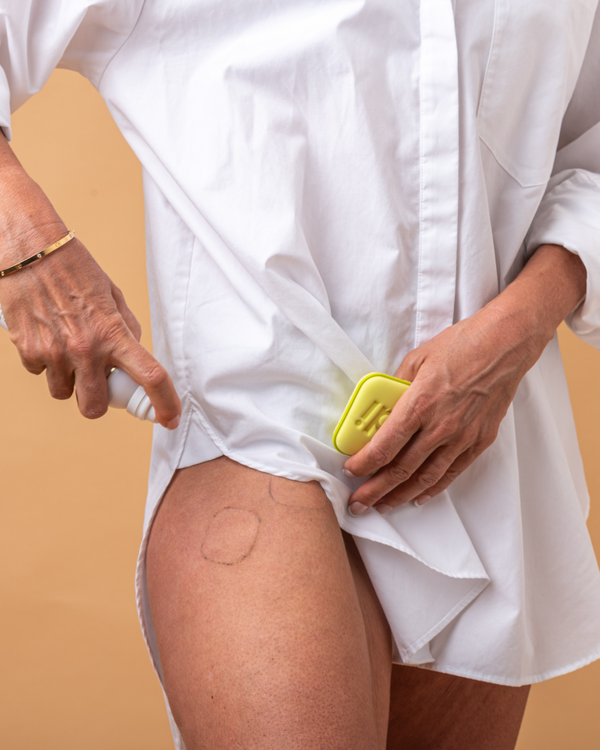
When you are feeling frazzled, the little daily frustrations matter more than ever. For women using HRT patches, scrubbing at sticky leftover glue is one small irritation you can do without. Nudi Spray lifts away patch residue in seconds, leaving skin clean and comfortable with no effort. It is one tiny way to make managing your menopause feel a little calmer.
Shop the Ultimate Starter Kit, £19.99 →
You can also explore the full Nudi Spray range here.
When to see your GP
Please reach out to your GP if anxiety is affecting your daily life, your sleep or your relationships, if it feels overwhelming, or if it is not easing. Anxiety is very treatable, and you deserve support. If you ever feel unable to keep yourself safe, contact your GP, call 111, or ring the Samaritans on 116 123 straight away.
Frequently asked questions about menopause and anxiety
Can menopause cause anxiety?
Yes. Anxiety is very common in perimenopause and menopause, affecting around half of women. It is largely driven by changing oestrogen levels, which affect serotonin and cortisol, the chemicals that regulate mood and stress. Broken sleep and other symptoms can add to it.
Why do I feel anxious for the first time in menopause?
Many women experience anxiety for the first time in perimenopause because hormone levels are at their most erratic then. Without hot flushes, it is easy not to connect the two. It often coincides with midlife pressures too. It does not mean anything is wrong with you, it is a genuine hormonal change.
Does HRT help menopause anxiety?
For many women it does, by steadying the fluctuating oestrogen behind the anxiety. Mood can occasionally dip at first, especially with cyclical HRT, before improving. If anxiety does not settle, your GP can adjust the type or dose, or discuss other options.
How can I calm menopause anxiety naturally?
Slow breathing and mindfulness calm the nervous system, regular sleep patterns help break the anxiety and insomnia cycle, and daily movement such as a brisk walk reliably lowers anxiety. Cutting back on caffeine and alcohol helps too. If anxiety persists, speak to your GP.
This article is for general information and is not medical advice. Always consult your GP or a qualified menopause specialist for guidance tailored to your individual circumstances.