


Thinking of switching your HRT patch to a different brand, or been told to because of a shortage or a skin reaction? It is more common than you might think, and usually very straightforward. Here is what to know before you change, and how to make the switch as smooth as possible.
Lots of women end up changing their HRT patch brand at some point, whether because their usual one is out of stock, their skin has started reacting, or their GP suggests a better fit. If that is you, there is no need to worry. Patches do the same essential job, and with a little know how, switching is rarely a big deal.
Why might you need to switch?
There are a few common reasons. Supply shortages have affected several HRT brands in recent years, so sometimes a switch is simply about what your pharmacy can get hold of. Other times it is about your skin, because patches that irritate one woman suit another perfectly well. And occasionally your GP will recommend a different brand or dose to better match your needs. Whatever the reason, it is a normal part of managing HRT.
Is it the hormone or the glue?
This is the key thing to understand, especially if you are switching because of skin irritation. The oestrogen itself is rarely the problem. Far more often it is the adhesive, and here is the useful part, different brands use different adhesives. That is why you might react to one patch yet get on brilliantly with another. So a persistent itchy or red patch is a very good reason to ask about trying a different brand, rather than giving up on patches altogether. If you want to compare two of the most common UK options, our guide to Evorel versus Estradot is a good place to start.
Talk to your GP or pharmacist first
Always check with your GP or pharmacist before switching, so they can make sure the dose matches up. Brands are not always a straight like for like swap, and a quick conversation means you keep the right amount of hormone without any guesswork. If a skin reaction is driving the change, do mention that too, as they can point you towards brands known to be gentler.
How to make the switch smooth
Start with clean, residue free skin
When you move to a new brand, give your skin the best possible fresh start. Lift off the old patch, clear away every trace of leftover glue, and make sure the skin is completely clean and dry before the new one goes on. Any residue from old adhesive, moisturiser or oil can stop a new patch sticking properly and add to irritation.
Rotate your patch site
Give your skin variety. Move the patch to a slightly different spot each time and try not to reuse the same place for about a week. This matters even more when you are trying out a new adhesive your skin is not used to yet.
Give it a little time
Your skin may take a short while to settle with a new brand, and mild redness at first often calms down. That said, if irritation is severe, spreading or blistering, or it does not settle, go back to your GP. For more on soothing sensitive patch skin, see our guide to preventing and soothing itchy skin from HRT patches.
Keeping every patch change clean with Nudi Spray
Whichever brand you land on, clean skin makes everything easier, and that is exactly where Nudi comes in. Scrubbing at stubborn leftover glue is harsh on skin and can make irritation worse, the very thing you are trying to avoid when you switch. Nudi Spray lifts away patch residue in seconds with no scrubbing, leaving skin clean and ready for the next patch. It is one simple way to give every brand the best chance of suiting you.
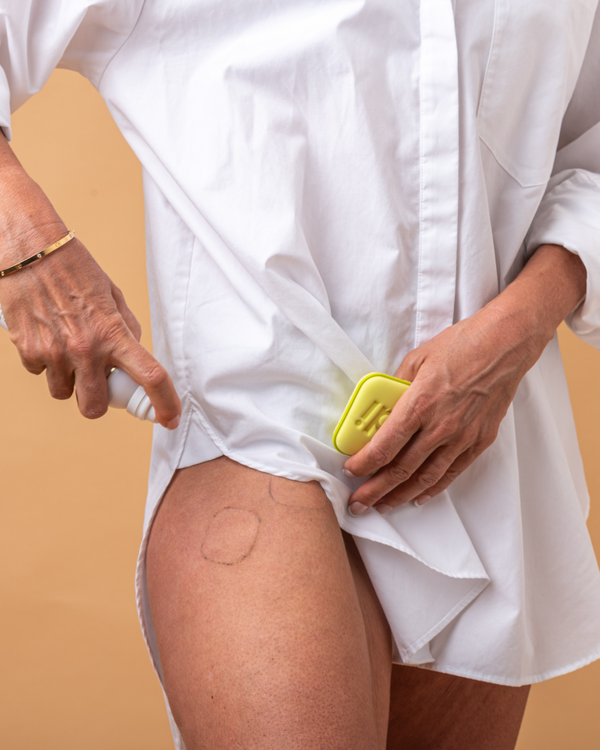
Shop the Ultimate Starter Kit, £19.99 →
You can also explore the full Nudi Spray range here.
When to see your GP
See your GP before switching so your dose stays right, and go back to them if a new patch causes a reaction that is severe, spreading or will not settle, or if you are unsure the new brand is working for you. They can help you find the patch that suits you best.
Frequently asked questions about switching HRT patch brands
Can I switch HRT patch brands myself?
It is best to check with your GP or pharmacist first. Brands are not always a direct like for like swap on dose, so a quick conversation makes sure you keep the right amount of hormone. If a skin reaction is prompting the change, mention it, as they can suggest gentler options.
Why does one HRT patch irritate my skin and another does not?
Because different brands use different adhesives, and the adhesive, rather than the hormone, is usually what causes irritation. Many women react to one patch but tolerate another perfectly well, which is why switching brands is often an effective fix for a persistently itchy or red patch.
Will switching patch brands change how well my HRT works?
As long as your GP or pharmacist matches the dose correctly, a different brand should give you the same essential benefit. Patches deliver oestrogen through the skin in a similar way, so the main differences between brands tend to be the adhesive and how the patch feels, not the effect.
How do I stop a new patch irritating my skin?
Start with clean, dry, residue free skin, rotate the patch site each time, and give a new brand a short while to settle. Avoid scrubbing off old glue, as that worsens irritation. If a reaction is severe, spreading or does not settle, see your GP.
This article is for general information and is not medical advice. Always consult your GP or a qualified menopause specialist for guidance tailored to your individual circumstances.